
Many people wonder, "Are these blood pressure readings really accurate?" The common belief is that regular calibration ensures correct values. However, the reality is more complex.
The accuracy of a blood pressure monitor depends not only on calibration but also on whether it is backed by a comprehensive and diverse blood pressure database. Such a database reflects real-world variations across different ages, genders, populations, and clinical scenarios. Without it, it’s like a doctor relying on a single patient case that cannot represent the whole population.
In fact, accuracy is never guaranteed. Without a representative blood pressure database, manufacturers struggle to scientifically validate devices, and authorities cannot accurately assess blood pressure distributions or health risks. This undermines product approvals, international certifications, and might expose users to long-term health risks from incorrect readings.

Figure 1: The accuracy of blood pressure monitors should not be taken for granted. Establishing a comprehensive blood pressure database can effectively help manufacturers conduct more scientific verification.
Why Are Current Blood Pressure Monitor Regulations Insufficient?
In Taiwan, for example, blood pressure monitors must get government approval before market entry, sometimes requiring validation data. Yet, there are no mandatory post-market calibration or performance checks, meaning many products lack ongoing oversight after launch.
Different measurement methods—such as the traditional Korotkoff sounds and the modern oscillometric method—can yield significantly different results in specific populations or scenarios. This risks misdiagnosis or delayed treatment in clinical settings, and misinformation for home users.
Three Main Causes of Inconsistent Blood Pressure Monitor Testing Results
- Insufficient Clinical Data
Most algorithms require large clinical datasets for calibration and improvement. However, manufacturers often lack access to adequate data across age groups, diseases, or special conditions.
- Cost Considerations
Home monitors typically have low prices, and manufacturers are reluctant to invest heavily in data collection, as costs are hard to recoup.
- Lack of Unified Standards
Even with data, differing test methods and parameters across manufacturers hinder comparison and prevent unified industry benchmarks.
The Key Value of a Blood Pressure Database
A blood pressure database provides a reproducible, comparable, and verifiable reference point. It allows different brands and models to be tested for accuracy under the same standards.
By collecting diverse clinical data from various populations, diseases, and measurement scenarios, manufacturers can:
- Improve algorithms for more accurate readings
- Rapidly validate new product performance during development
- Meet international and local regulatory requirements, raising market barriers and brand trust
For governments, establishing such databases means:
- Enhancing public health monitoring through accurate tools
- Providing reliable data to inform policy decisions
- Reducing medical costs by avoiding unnecessary treatments from incorrect readings
How to Achieve This?
Building a blood pressure database requires collaboration among governments, healthcare institutions, manufacturers, and testing labs:
- Government-led Standard Development
Establish certification standards and testing protocols, requiring both pre-market and periodic post-market validations.
- Active Manufacturer Participation
Collaborate with testing bodies to include products in database testing and optimize algorithms according to results.
- Application of Testing and Simulation Technologies
Use advanced blood pressure simulators like WhaleTeq’s BPA700 to reproduce real blood pressure data and varying clinical scenarios quickly for product validation and comparison.
Case Study: BPA700 in Action
The BPA700 is capable of replaying blood pressure data and offers adjustable simulation parameters to replicate variations seen in different ages, diseases, and measurement conditions. This significantly improves testing efficiency and accuracy, helping new products reach high clinical performance before market launch.
Moreover, BPA700 can record near-real raw data without signal processing. This high-quality original data is crucial for algorithm development and validation, especially for AI-powered blood pressure monitors. Manufacturers can accelerate algorithm optimization and break through traditional technical bottlenecks, creating smarter, more accurate devices.
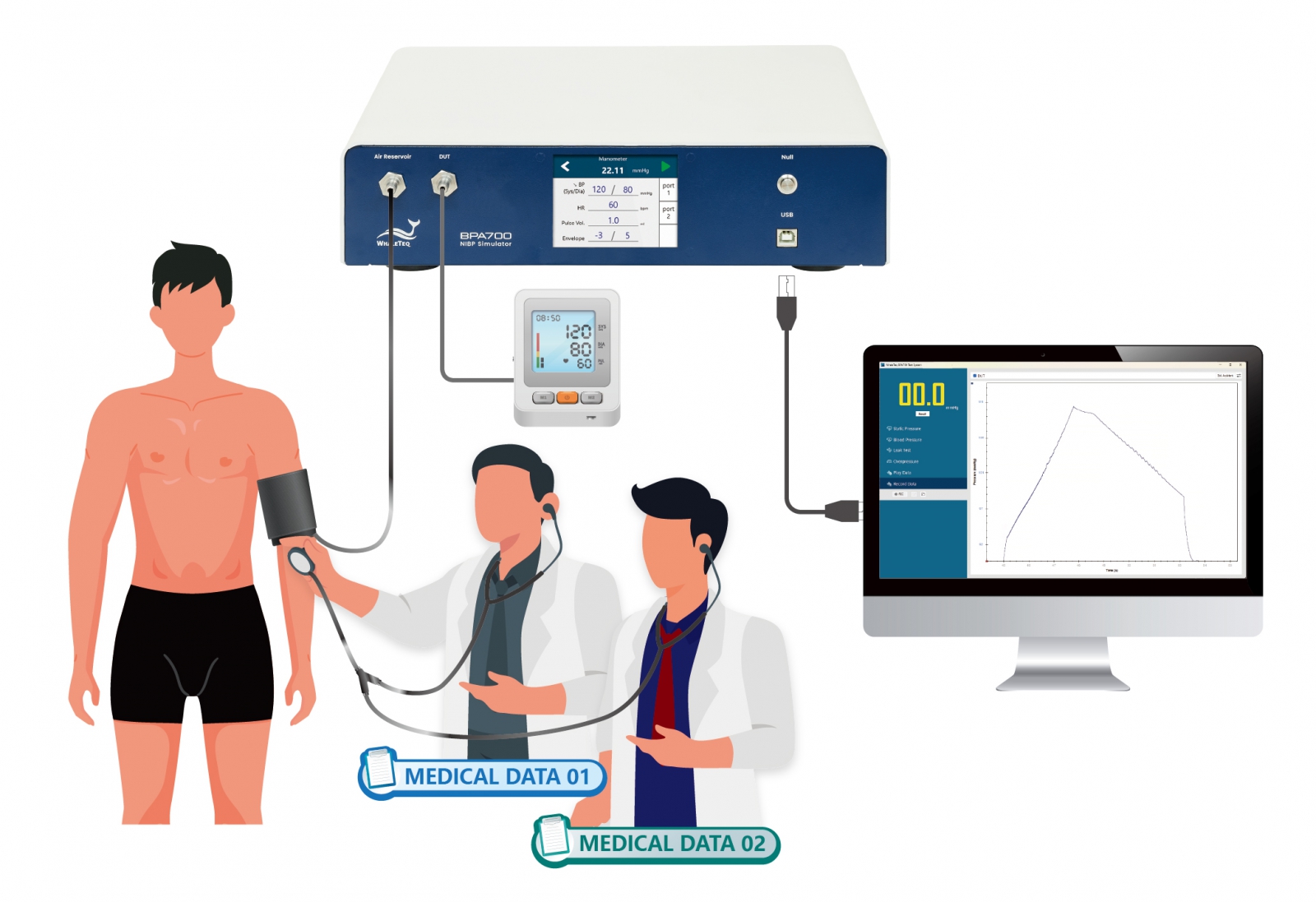
Figure 2: The BPA700 helps the BTL R&D team verify the performance and stability of blood pressure monitors in clinical settings.
Click here to see a real-world application example➡️ BTL India x WhaleTeq BPA700
Collaboration: The Foundation of Precision Medicine
A comprehensive blood pressure database is the “common language” of the medical industry and a vital cornerstone for manufacturers, governments, and healthcare institutions to jointly advance precision medicine. It ensures monitor accuracy, boosts global competitiveness, and strengthens national public health policies.
On the path to precision medicine, collaboration is the key driver.
Want to learn how BPA700 and a blood pressure database can boost your product quality and streamline validation?
👉 Contact WhaleTeq and partner with us to create a more reliable medical testing environment!
👉 More Info: BPA700 | NIBP Simulator